
How TU Delft Calculates Your Ranking Score
There's no fixed pass mark for the TU Delft Aerospace Engineering or Computer Science selection. Your ranking depends entirely on how you perform compared to other applicants.
Relative Scoring: What It Means
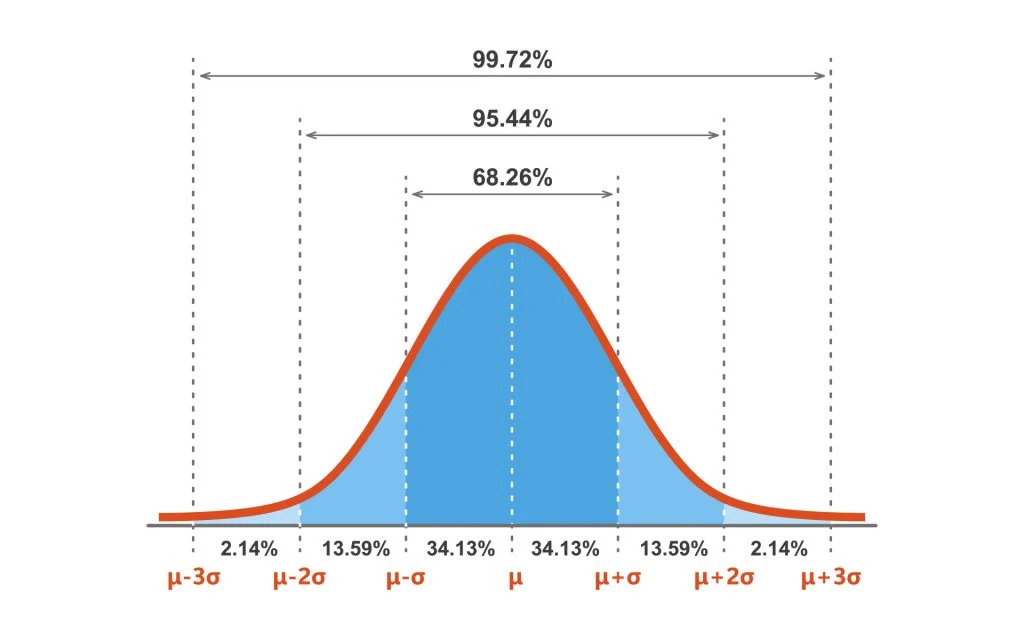
TU Delft uses Z-scores to standardize results across all candidates. In simple terms:
- Your score is compared to the average score of all applicants
- If you score above average, you get a positive Z-score
- If you score below average, you get a negative Z-score
This means there's no magic number of correct answers that guarantees admission. If the exam is difficult and everyone struggles, a lower raw score might still give you a strong ranking. If the exam is easy and everyone does well, you need a high raw score to stand out.
How Your Final Ranking Is Calculated
Your Z-scores from each component are weighted and combined to produce your final ranking score.
Your ranking is based entirely on your CST performance.
What This Means for Your Preparation
1. Every point matters. Since you're competing against other applicants, small improvements in your score can move you up significantly in the rankings.
2. Strong sections can compensate for weaker ones. If you excel in Math but struggle with Physics, your strong Math Z-score can partially offset a weaker Physics score.
3. You can't predict the cutoff. Because ranking is relative, there's no way to know in advance what score will be "enough." Focus on maximizing your own performance rather than targeting a specific number.
4. Preparation gives you an edge. Most applicants rely only on the free TU Delft materials. Structured practice with exam-style questions can help you outperform candidates who are less prepared — which is exactly what matters in a relative scoring system.
Explore more

Complete TU Delft Aerospace Selection Guide 2026/27

MPT-Study Guide

TU Delft Selection Exam Strategy Guide
Free First-Year Topics Study Guides